
Chicago Patent Attorney
Sherinian Law helps Chicago-area inventors, startups, and technology companies protect their inventions with strong, carefully drafted U.S. patents. Our attorneys combine deep technical backgrounds in electrical engineering, computer science, and mechanical engineering with real patent-litigation experience—so the applications we prepare, file, and prosecute are built to hold up, not just to get allowed. Our attorneys focus on patents for software and artificial intelligence, as well as utility patents for electronics, mechanical, and electromechanical products.
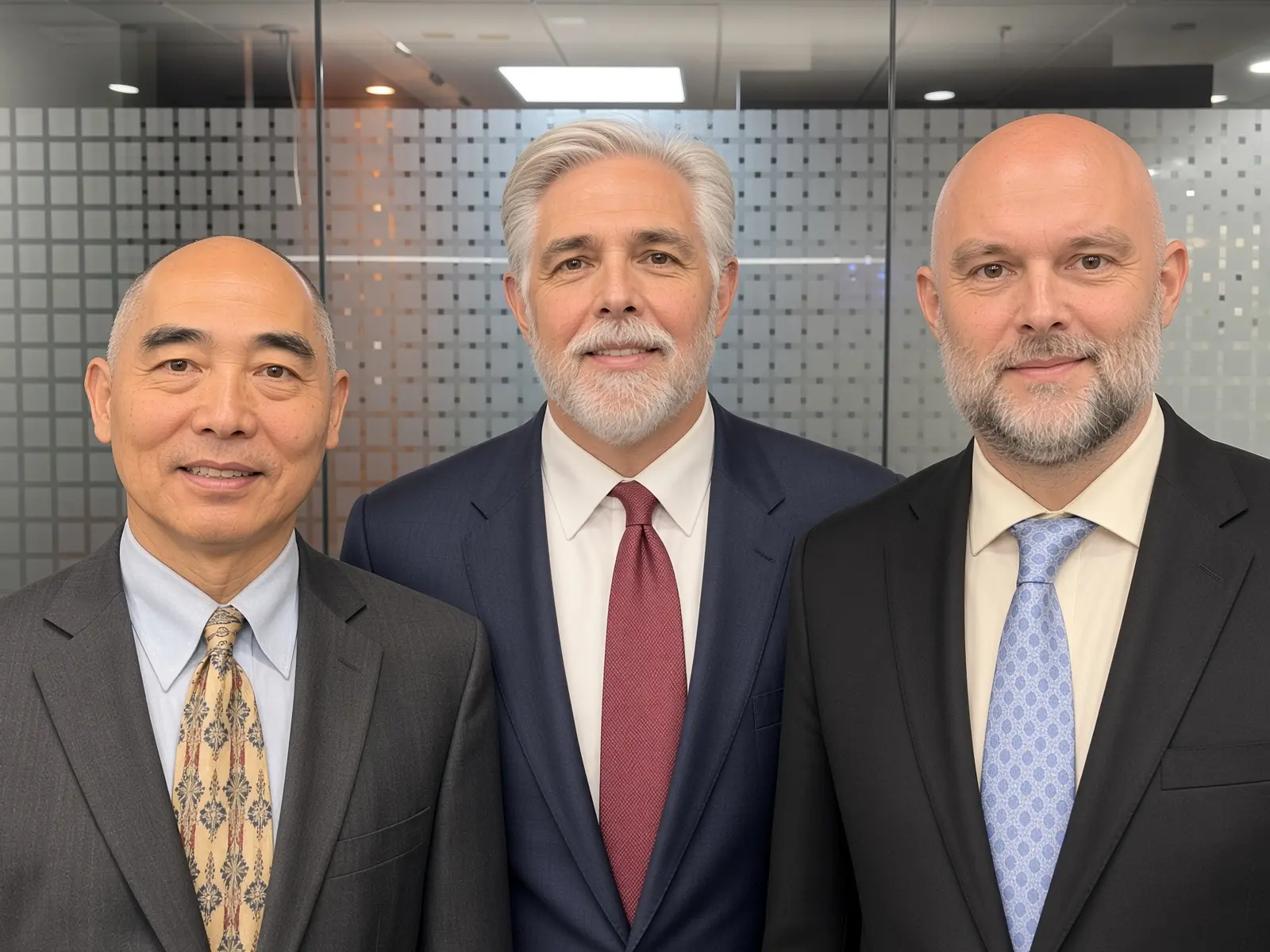
Patent Attorneys Serving Chicago Inventors and Technology Companies
Sherinian Law represents inventors and businesses across Chicago and its suburbs, from software founders and AI developers to engineers improving electronic and mechanical products. Patent applications are filed with the federal U.S. Patent and Trademark Office (USPTO), so Chicago clients can work with the firm by video or phone, or in person at its Naperville office, about 30 miles west of downtown.
Naperville, IL 60563
Patent Drafting Informed by Litigation Experience
A patent is only as useful as its claims and the description that supports them. Claims that are too narrow leave variations unprotected. Broader claims still have to be supported by the application and distinguished from the prior art.
Konrad Sherinian has represented clients in both patent prosecution and patent litigation. In litigation, what the claim terms mean, and how the original application described the invention, often decide the case. That experience informs the firm's approach to drafting: careful description of the invention, attention to whether each claim is supported, and wording chosen with later interpretation in mind.
Before drafting, we learn how your invention works, what similar technology already exists, and whether any public disclosure has occurred. Those facts decide what can be claimed, when to file, and whether a provisional or nonprovisional application fits your goals.
Patent Services for Chicago Inventors and Businesses
We handle each stage of U.S. patent protection, from deciding whether and how to file through USPTO examination and follow-on applications.
Software and AI Patent Applications
Software, SaaS platforms, AI and machine-learning systems, and mobile applications are the center of our practice. We start by pinning down the technical improvement behind your product, such as a faster data pipeline, a new way to train or apply a model, or a more efficient network protocol, and build the claims around it. Identifying that improvement early is central to addressing patent-eligibility questions.
Learn more about our software and AI patent servicesUtility Patent Applications
For inventions that concern how something works, such as devices, systems, methods and machines, we prepare the nonprovisional utility application: the technical description, drawings and claims. We focus on describing the invention accurately and claiming it as broadly as its disclosure supports.
Provisional Patent Applications
A provisional application establishes an early U.S. filing date for the invention it adequately describes. It is not examined and does not grant patent rights. To keep that filing date, a nonprovisional application must generally be filed within 12 months. We draft provisionals with enough technical detail to support the claims you will need later.
Office Action Responses, Including Section 101 Rejections
When a USPTO examiner rejects your claims, we analyze the Office Action and prepare a response with legal argument, technical explanation and, where useful, claim amendments or an examiner interview. That includes Section 101 subject-matter eligibility (Alice) rejections, which are common for software and AI inventions, as well as novelty (102), obviousness (103) and written-description or definiteness (112) rejections.
Patentability Searches
Before you invest in an application, a patentability search shows what prior art may stand in the way. We review the results against your invention and advise whether to file, refine the invention, or investigate further.
Continuation and Continuation-in-Part Applications
As your product evolves, a continuation can pursue additional claims supported by an earlier application, and a continuation-in-part can add new subject matter. New matter does not automatically receive the earlier filing date. Your filing status and deadlines decide which options remain open.
PCT and International Patent Filing
For protection outside the United States, we help you choose filing routes, countries and deadlines, including Patent Cooperation Treaty (PCT) applications, and coordinate with foreign counsel. A PCT application does not produce a worldwide patent. Protection still requires national or regional filings.
Design Patent Applications
If your product's distinctive appearance is what sets it apart, a design patent can protect its ornamental features. We identify the visual features to claim and prepare the application and required drawings.
Representative U.S. Patents From Chicago-Area Inventors
Sherinian Law handled both of these issued patents for inventors in the Chicago suburbs. They show the kind of software-controlled and optical-electronic systems the team drafts and prosecutes.

Context-Controlled Video Quality Camera System
U.S. Patent 11,818,461 B2The patent covers a camera system that changes video-quality settings based on recording context, such as location, time or sensed conditions. Depending on the rule that applies, the software adjusts the settings automatically or prompts the user to choose, and those rules can be updated over time. The application documents how the video hardware, software and user controls interact, which is a concrete example of drafting for a computer-controlled electronic system.

Dazzling System Coupled to a Camera Mounted in a Fixed Location
U.S. Patent 11,555,674 B2This patent covers a non-lethal dazzling device that combines a visible-light laser with a camera and an on-board computer. Intended for fixed locations such as a store counter, it can stream video to a remote operator who aims and activates it, and the disclosure also describes an autonomous version triggered by a panic button. Its drawings and description show how one application can document the relationships between optical, electronic and mechanical parts.
Meet the Patent Team
Our patent attorneys have backgrounds in electrical engineering, computer science and mechanical engineering, together with experience in USPTO prosecution and patent disputes.
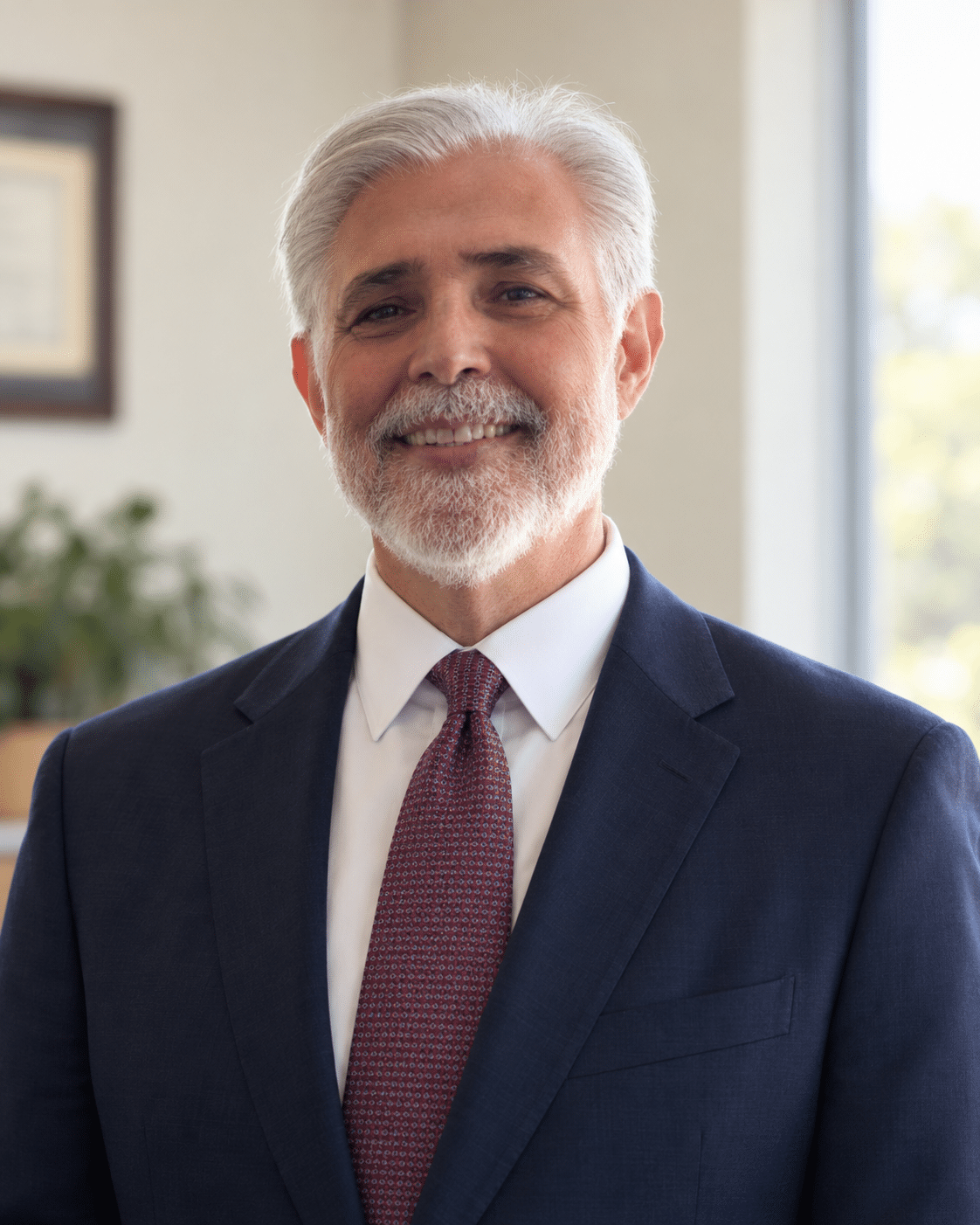
Konrad Sherinian
Konrad Sherinian represents inventors and technology companies in patent preparation, USPTO proceedings and intellectual property disputes. He holds a B.S. in Electrical Engineering and Applied Physics from Case Western Reserve University and a J.D. from The John Marshall Law School, now part of the University of Illinois Chicago.
View profile
Depeng (Edward) Bi
Before law, Edward Bi worked as an engineer and engineering manager in computer and communications technology. He holds an M.S. in Computer Science from Northern Illinois University, a bachelor's degree in Mathematics from Peking University, and a J.D. from The John Marshall Law School. He prepares and prosecutes applications for software, computer systems and wireless communications, and coordinates PCT and international filings.
View profile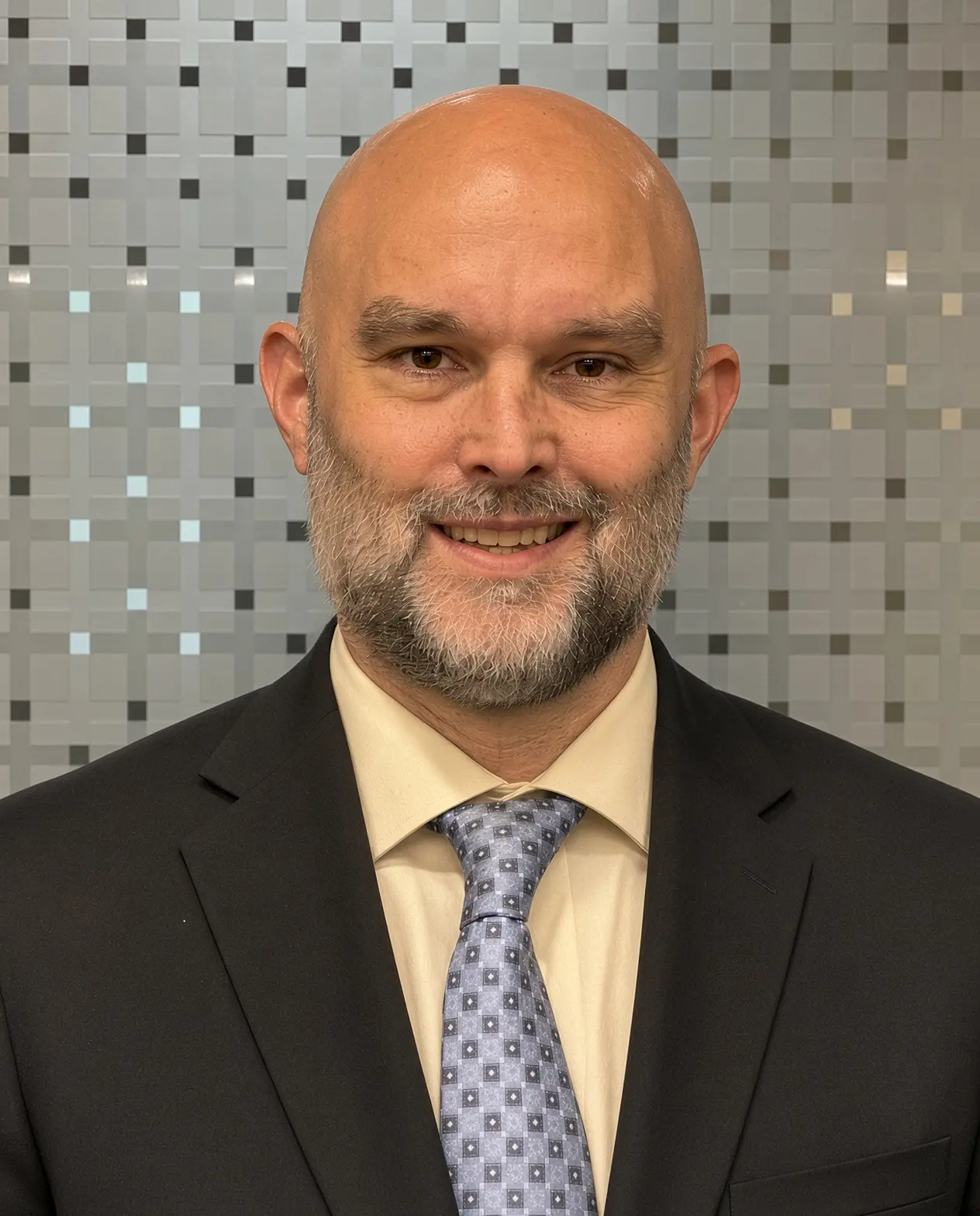
Jeffrey Dixon
Jeffrey Dixon holds a B.S. in Mechanical Engineering from the University of Nebraska–Lincoln and a J.D. and LL.M. in Intellectual Property Law from The John Marshall Law School. His mechanical engineering background supports the team's work on mechanical components, assemblies and equipment.
View profileWhat Clients Say
Reviews from clients who have worked with Sherinian Law.
Konrad Sherinian is a talented patent attorney. He had years of experience as an electrical engineer prior to getting his law degree, and that adds depth to his understanding of technical IP issues... Read more
Edward Bi is a fantastic attorney with excellent knowledge of software architecture and cloud computing, and he has filed a number of patents on my behalf. Highly recommended... Read more
It was great working with Konrad and team. They made the entire process smooth and easy. Highly recommended... Read more
Inventions and Technologies We Work With
Software, AI and Mobile Applications
Computer-implemented inventions, including AI models, data processing, equipment control and communication between systems.
Electronics and Connected Devices
This covers sensor-based equipment, embedded control systems and IoT devices that collect data, respond to changing conditions or exchange information with other systems. We capture both the hardware and the software that runs it.
Mechanical Inventions
This ranges from a new mechanism or component to an improvement in how existing equipment operates. Component arrangement, movement, connections and function are the details that matter in the application.
Electromechanical and Optical Systems
Some inventions combine mechanical movement, electronic controls, sensors and optics, for example camera-associated equipment or devices that depend on precise alignment. We describe how those parts work together so the application covers the system as it actually operates.
What Happens When You Contact Us
Request a consultation
Call or use the form. Keep your first message brief and non-confidential. Contacting us does not by itself create an attorney-client relationship.
Discuss your invention
The initial consultation can cover how the invention works, its development stage, any public disclosures, likely patentability issues and your business goals.
Agree on the scope of work
You receive a written, project-specific quote listing the services, estimated attorney fees, USPTO fees and the upfront payment before any work begins.
Prepare the application
We organize the technical information, draft the description and claims, and prepare or coordinate the drawings.
File with the USPTO
We file the application and required documents. Filing does not mean a patent has been granted.
Respond to examination
Nonprovisional applications are examined. If the examiner raises rejections, we review the Office Action with you and prepare the response.
Allowance and next steps
If the claims are allowed, an issue fee must be paid before the patent is granted, and maintenance fees apply to utility patents after grant. We can explain related options such as continuation filings.
Patent Consultation and Fees
Patent Consultation: $250 for 45 minutes
In a consultation, you discuss your invention with a Sherinian Law patent attorney before committing to further work. We identify realistic filing options, any issues that need investigation, and practical next steps for your goals.
Request a Patent ConsultationAttorney Fees for Patent Applications
Attorney fees depend on the invention's technical complexity, the type of application and the scope of work. Every matter receives a written, project-specific quote before work begins.
USPTO Government Fees
USPTO fees are separate from attorney fees and depend on the application type and your entity status. Small entities and micro entities qualify for reduced fees. The engagement documents list the anticipated government fees, and you can check current amounts on the USPTO fee schedule .
Chicago Patent Attorney FAQs
At Sherinian Law, a patent consultation costs $250 for 45 minutes. Application fees are quoted in writing after we review your invention. USPTO fees are separate, and responding to Office Actions during examination can add cost.
Many U.S. patent applications take two years or more from filing to a final decision, depending on the technology area and how many Office Actions arise. The USPTO publishes current averages on its Patents Pendency dashboard. Its Track One prioritized examination, available for an additional fee, aims for a final decision within 12 months, on average, of the request being granted.
No. Patent applications are filed with the federal USPTO, so a registered patent attorney anywhere in the U.S. can represent you. A Chicago-area firm simply makes in-person meetings easier. You can meet with us by video or at our Naperville office, about 30 miles west of downtown.
Yes, when the claims are directed to a specific technical improvement rather than an abstract idea. Under the Supreme Court's Alice framework, simply running a business method on a computer or using AI is not enough. Claims that improve how a computer, network or model actually functions can qualify. The invention must also be new and nonobvious.
A Section 101 rejection means the examiner believes your claims are directed to an abstract idea, law of nature or natural phenomenon without significantly more. It is a frequent rejection for software, business-method and AI applications, although obviousness (103) rejections are still more common overall. Responses typically show how the claims integrate the idea into a practical technical application, amend the claims to emphasize the technical improvement, or use an examiner interview. Whether a rejection can be overcome depends on what the application discloses.
A provisional can make sense when you need an early filing date while development or fundraising continues. It is not examined, and it expires after 12 months, so the nonprovisional (the application the USPTO actually examines) must be filed within that year to keep the earlier date. A provisional only supports what it adequately describes, so later improvements may need a new filing.
Possibly. In the U.S., an inventor's own public disclosure generally starts a one-year grace period to file. Many other jurisdictions, including Europe and China, have no comparable grace period, so a disclosure can block protection there. Talk to a patent attorney before any further disclosure.
It is not required, but it is often worthwhile. A search can reveal prior art that changes what you claim, or shows the invention is not worth the filing cost. No search finds every reference, so it reduces risk rather than guaranteeing a patent.
Bring a clear description of what the invention does, how it works and its development stage, any sketches, drawings or prototype details, known similar products, and the dates of any public disclosures. Keep your first web inquiry brief and non-confidential. We will arrange a secure way to share technical details.
That depends on the invention and the work required. The team includes attorneys with backgrounds in electrical engineering, computer science and mechanical engineering, and matters are staffed to fit the technology. Before you retain the firm, you can ask who will be responsible for your application and how each attorney will be involved.
Talk to a Chicago Patent Attorney About Your Invention
Tell us what you have built. In a 45-minute consultation, an engineer-attorney will walk you through your filing options, likely obstacles and next steps.
Request a Patent Consultation
Complete the form below and our team can review your inquiry.